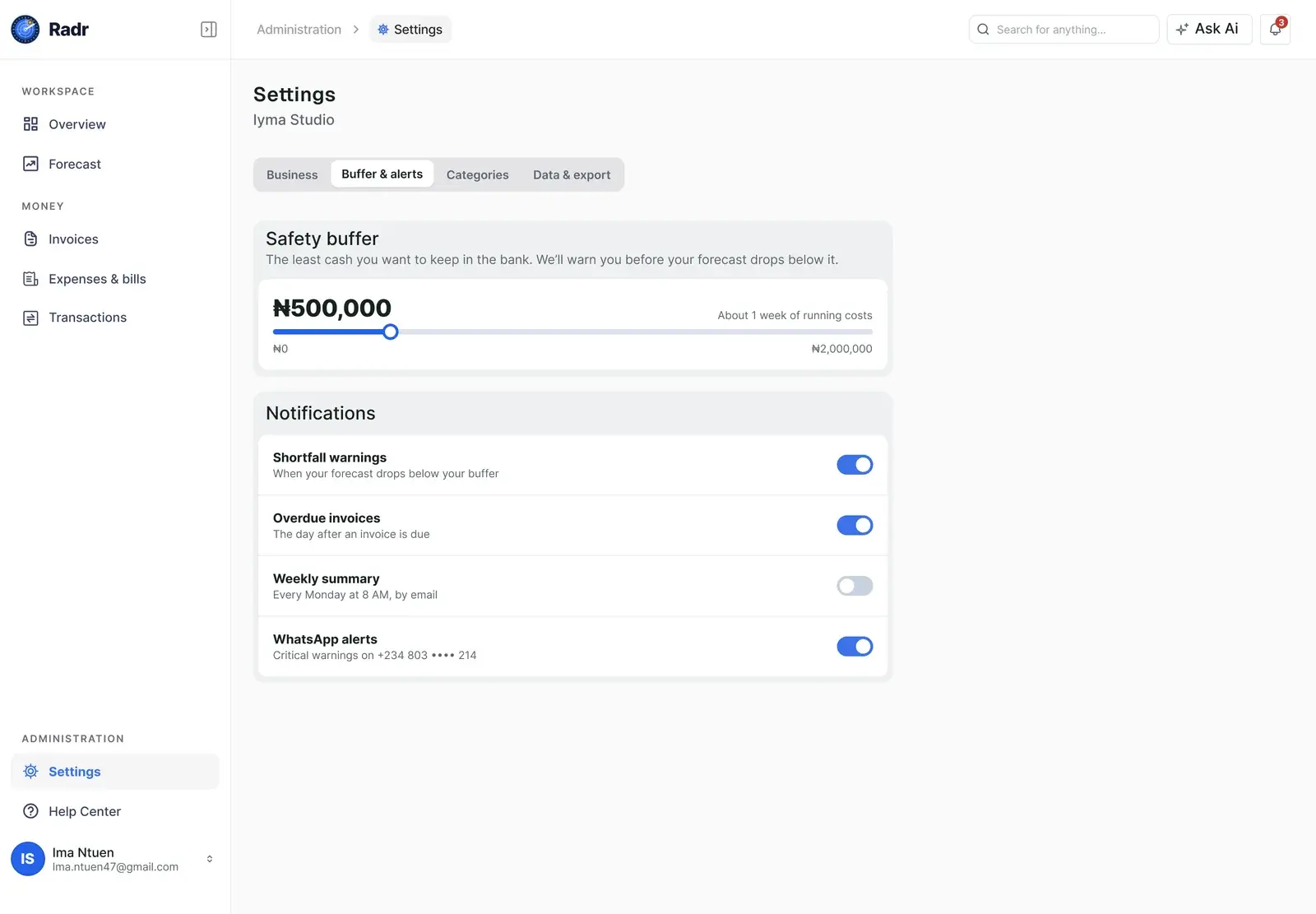
Fintech · B2B SaaS · Web app
Radr
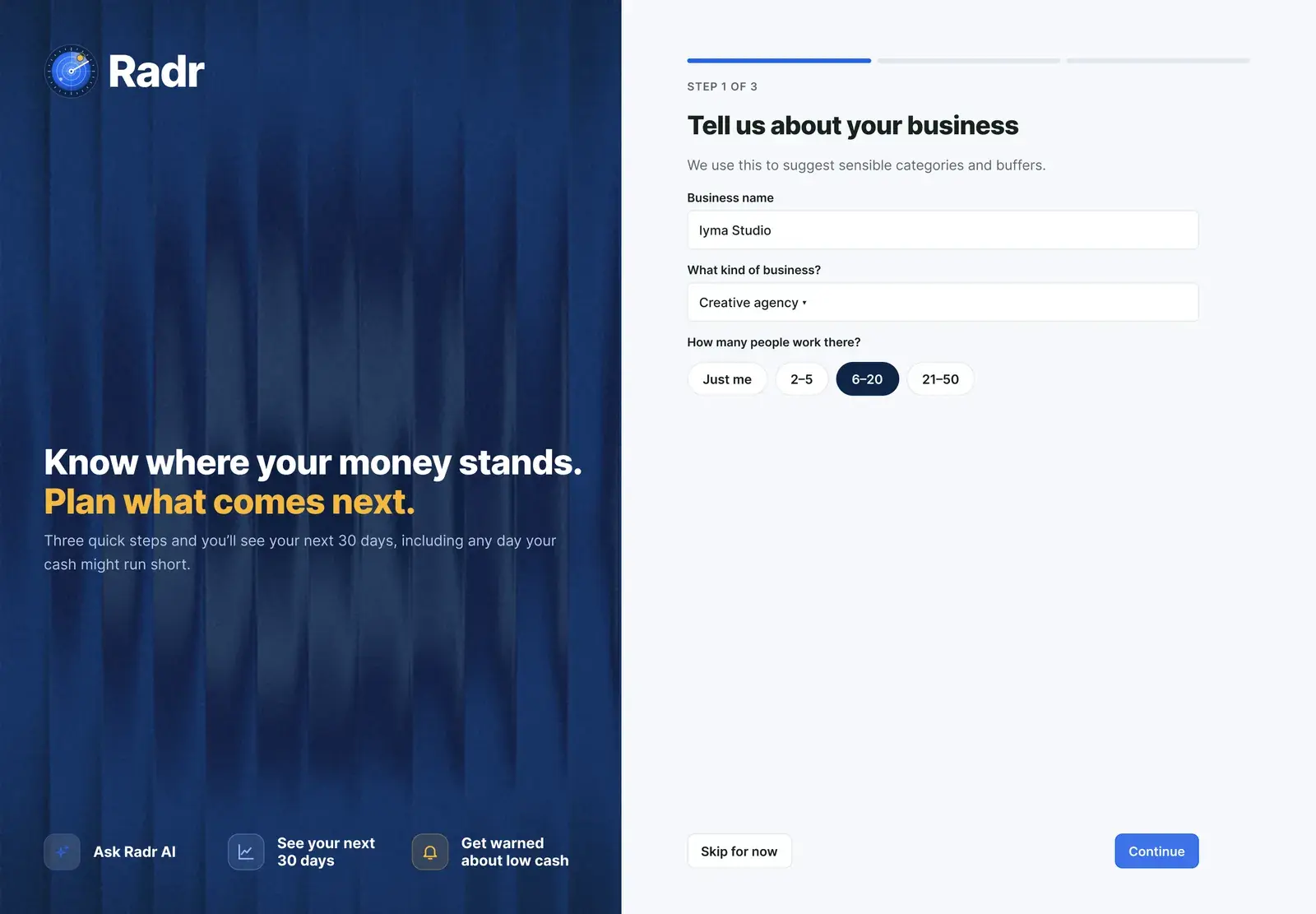
Radr is a simple money app for small businesses in Nigeria. It looks at the money you have, the money you’re owed and the bills coming up, and tells you weeks ahead if you’re about to run short.
- Year
- 2026
- Role
- Product designer, UI/UX, UX researcher
- Tools
- Figma, Claude
- Type
- Concept project
Project overview
Most small business owners can tell you what’s in their bank account today. Few can tell you what will be there in three weeks. Salaries, rent and supplier bills leave on fixed dates, while client payments often arrive late. Radr puts all of that on one timeline, so an owner can check the weeks ahead the way they’d check the weather: calm, or a storm coming? I designed it end to end (research, flows and UI) and built the working prototype with AI.
The challenge and research
The same story kept coming up: the business makes money, yet some months salaries are paid late because a big client paid late
I spoke with owners of small agencies, shops and service businesses in Lagos. Most people tracked money in their heads, a notebook or a messy spreadsheet. Bank apps show what already happened, not what’s coming. Accounting tools felt made for accountants.
Tunde, 38
Founder, 12-person agency in Lagos
Wants a quick answer to “am I safe?” before he spends, and early warnings in plain words, not more spreadsheets.
Amaka, 31
Finance and operations lead, Abuja
Checks bank statements against her records by hand every month. Needs a quick way to bring statements in, spot anything entered twice, and show the owner which invoices and bills are paid.
Key findings
- They check their balance many times a day, yet still get surprised.
- Late client payments cause most cash shortages.
- They want a warning early enough to do something: chase a client, move a bill or wait to buy.
The problem
How might we help business owners see a cash shortage coming early enough to act, without needing to understand accounting?
Owners can’t see the money they have, the money they’re owed and the bills coming up in one place, so they often find out they’re short on payday, when it’s too late to fix.
Scattered records
Balances, invoices and bills sit in different apps and chats.
Late payments
Clients pay late or in parts, so it’s hard to know when money will arrive.
No view ahead
Bank apps show what already happened, not what’s coming next week.
The solution and strategy
Radr turns everyday money into a simple forecast
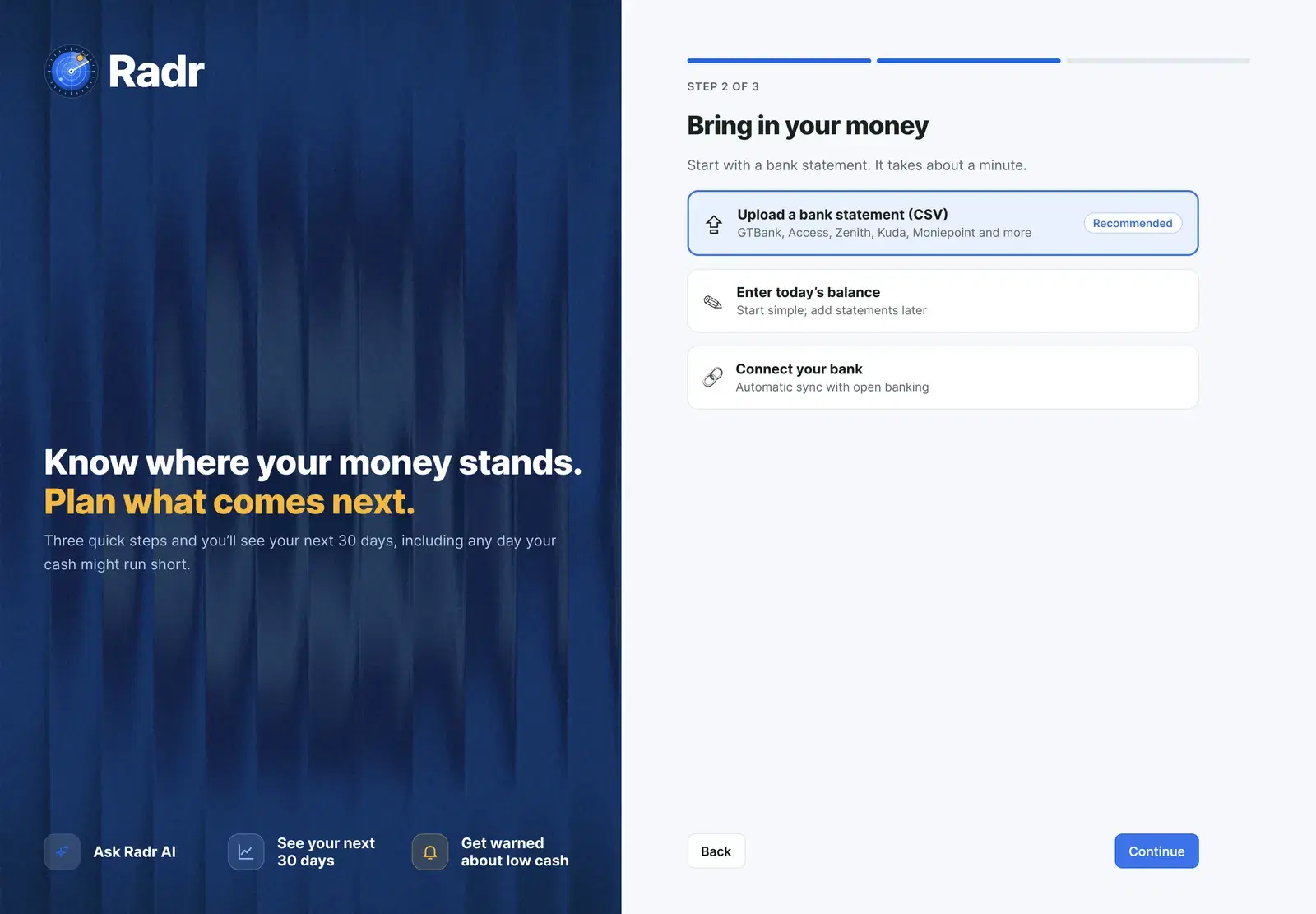
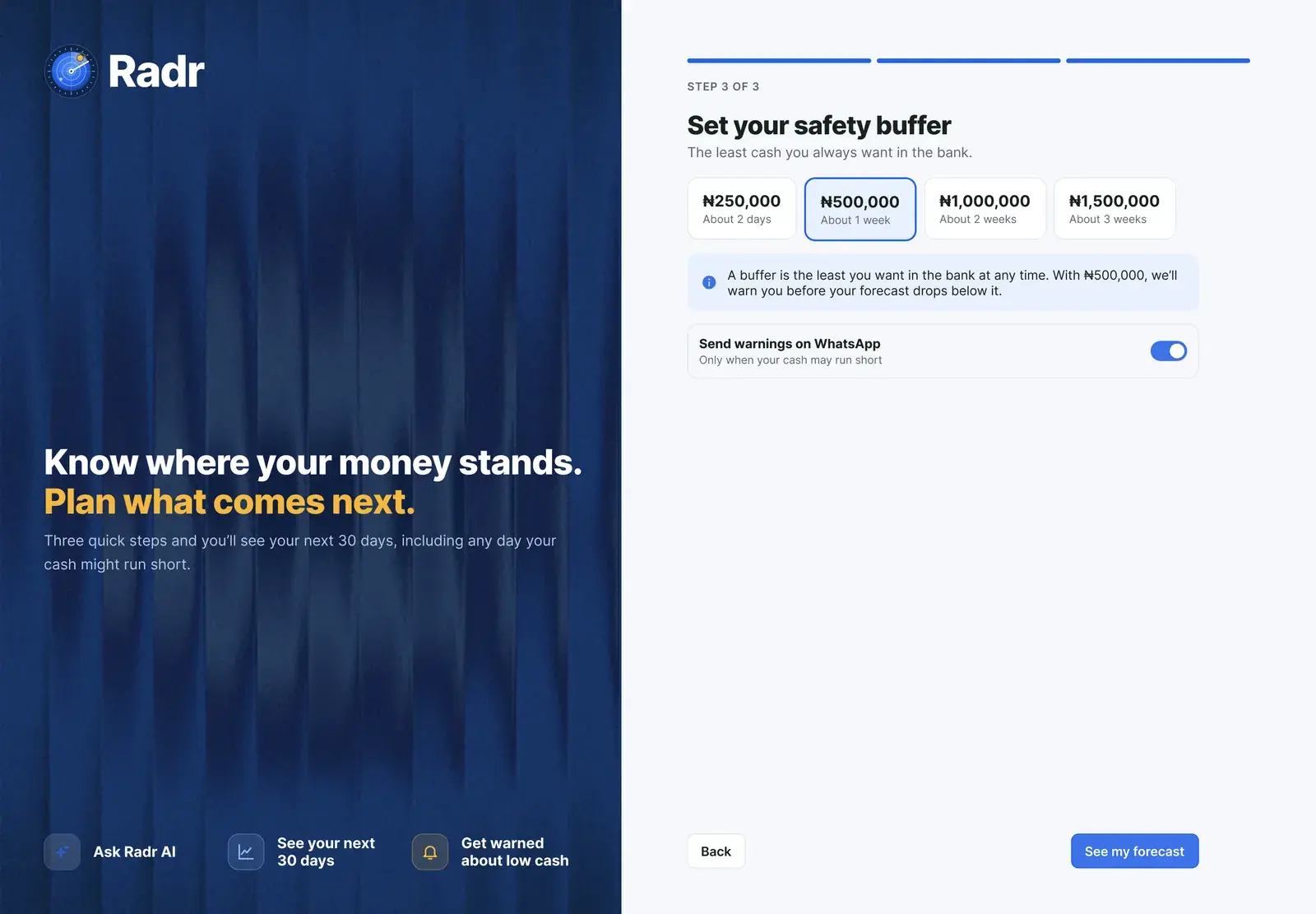
You add a bank statement, the invoices you’ve sent and the bills you owe, and Radr draws a line showing how much money you’ll have each day for the next 30 days. If that line is about to drop below the amount you always want to keep (your safety buffer), Radr warns you and explains why in plain words. And before you spend, you can ask Radr AI “Can I afford it?” and get a straight answer.
See ahead
One line shows how much money you’ll have each day for the next 30 days.
Understand why
Every dip comes with the payments behind it, so nothing is a mystery.
Act early
A warning comes before you drop below your safety buffer, while there’s still time to act.
Speak plainly
No accounting words: ask “Can I afford it?” and get a straight answer.
Inside Radr
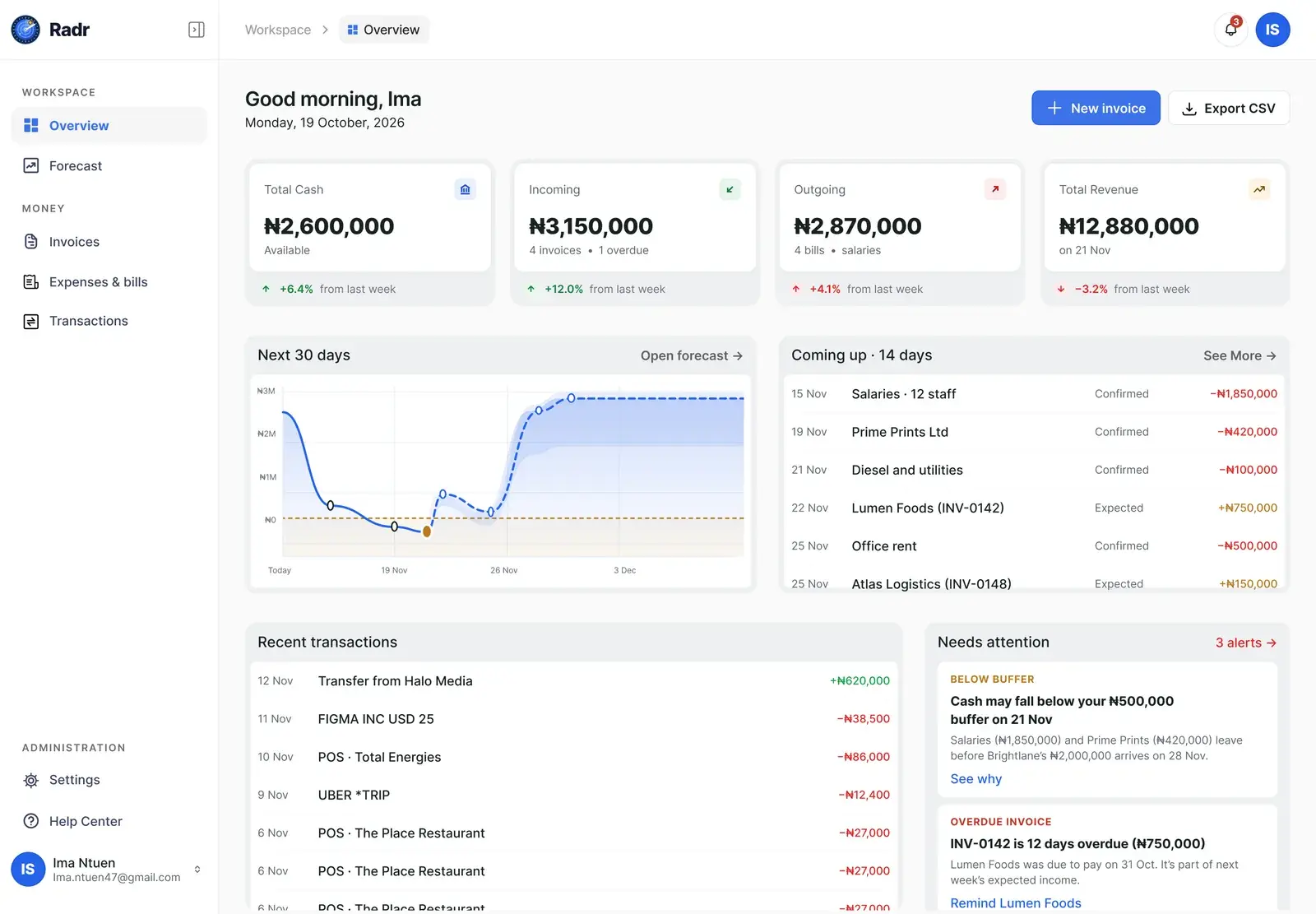
Overview
Your money at a glance: cash you have now, what’s coming in, what’s going out, and what needs your attention today.
Clear labels
Money you have, money you expect and the forecast are labelled differently, so a guess never looks like real money.
The risky day first
The lowest point ahead is shown upfront, not just the balance at the end.
What needs attention
Alerts sit next to the chart, each with one thing to do.
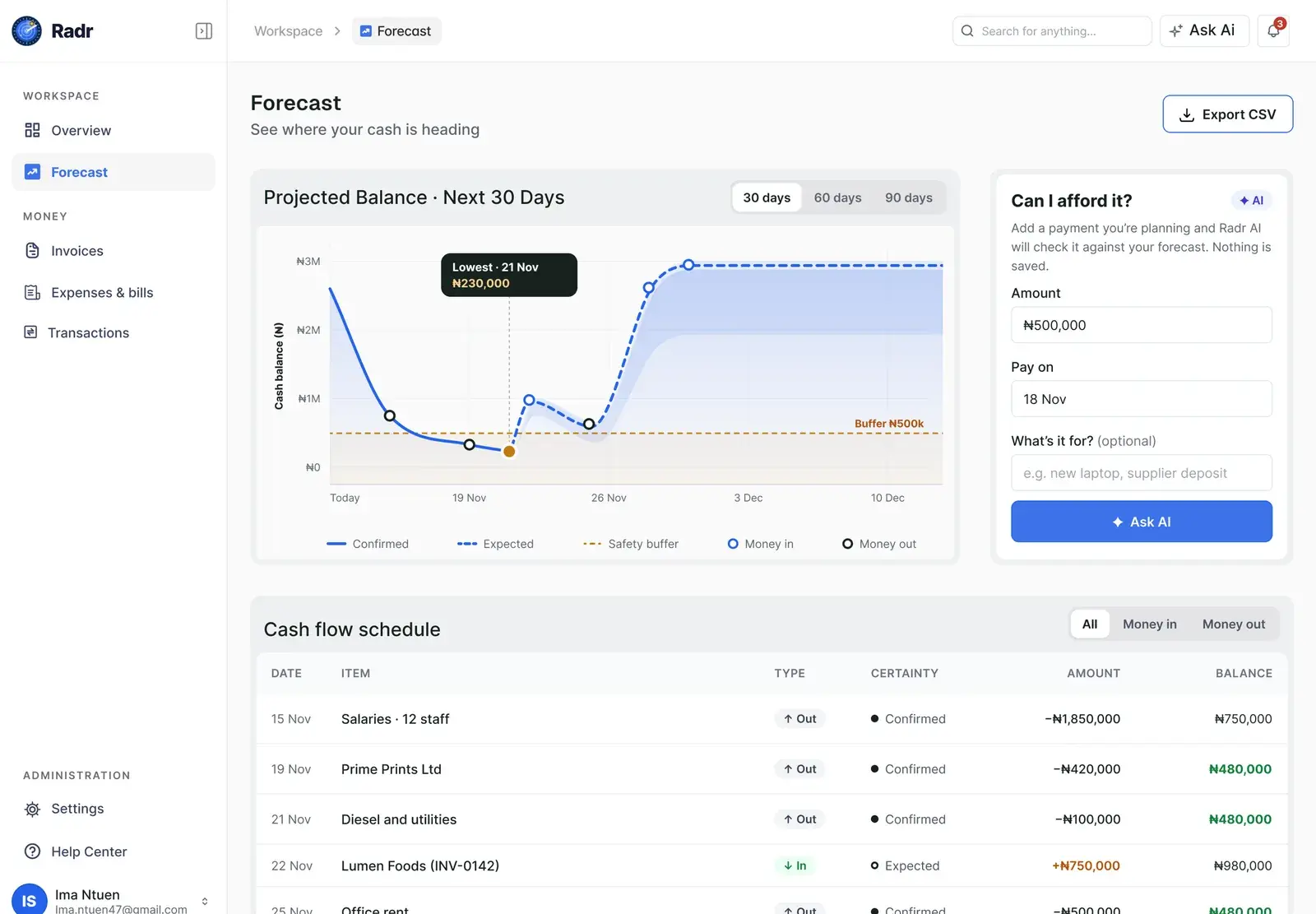
The forecast explains itself, and answers “Can I afford it?”
A line showing your balance for each of the next 30 days. The dip on 21 Nov is the danger point, and Radr shows exactly which payments cause it.
Planning a big purchase? Type the amount and date, tap Ask AI, and Radr tells you whether it’s safe, and when would be safer.
A safety line
An amber line marks your safety buffer, so risky days stand out.
Sure or expected
Confirmed payments are a solid line; money you expect is dashed.
Tap a dip to see why
Every low point lists the payments behind it and two ways to fix it.
Advice, not judgement
It never just says no: it shows how far below your buffer you’d go, and nothing is saved.
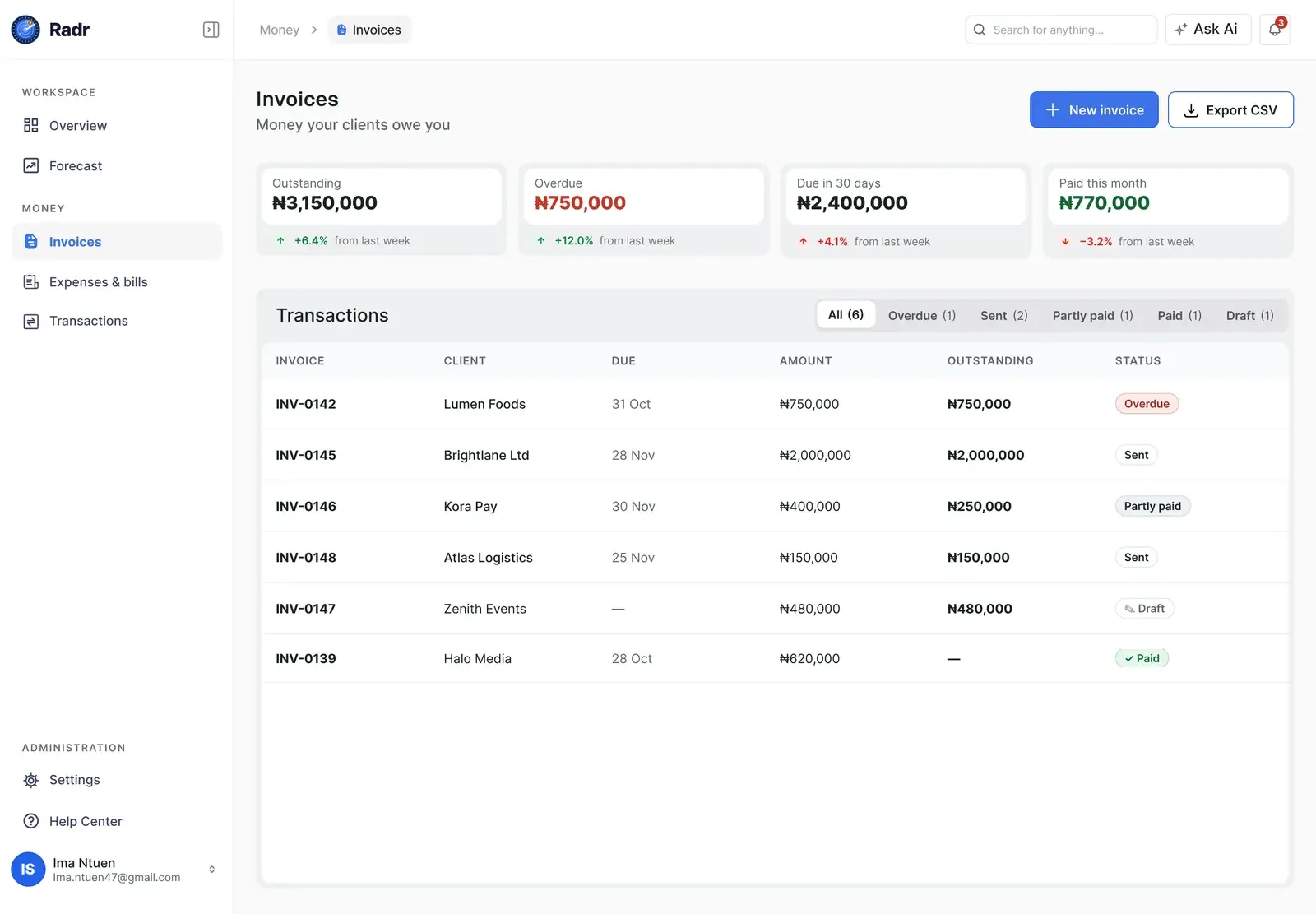
Invoices and partial payments
Every invoice you’ve sent and whether it’s paid, partly paid or late, so you know who to chase.
Status in words
Paid, Partly paid, Overdue, Sent and Draft are written out, never shown by colour alone.
Part payments
Recording ₦300,000 of a ₦750,000 invoice updates its status, the totals and the forecast.
Catches mistakes
It won’t let you record more than the client still owes.
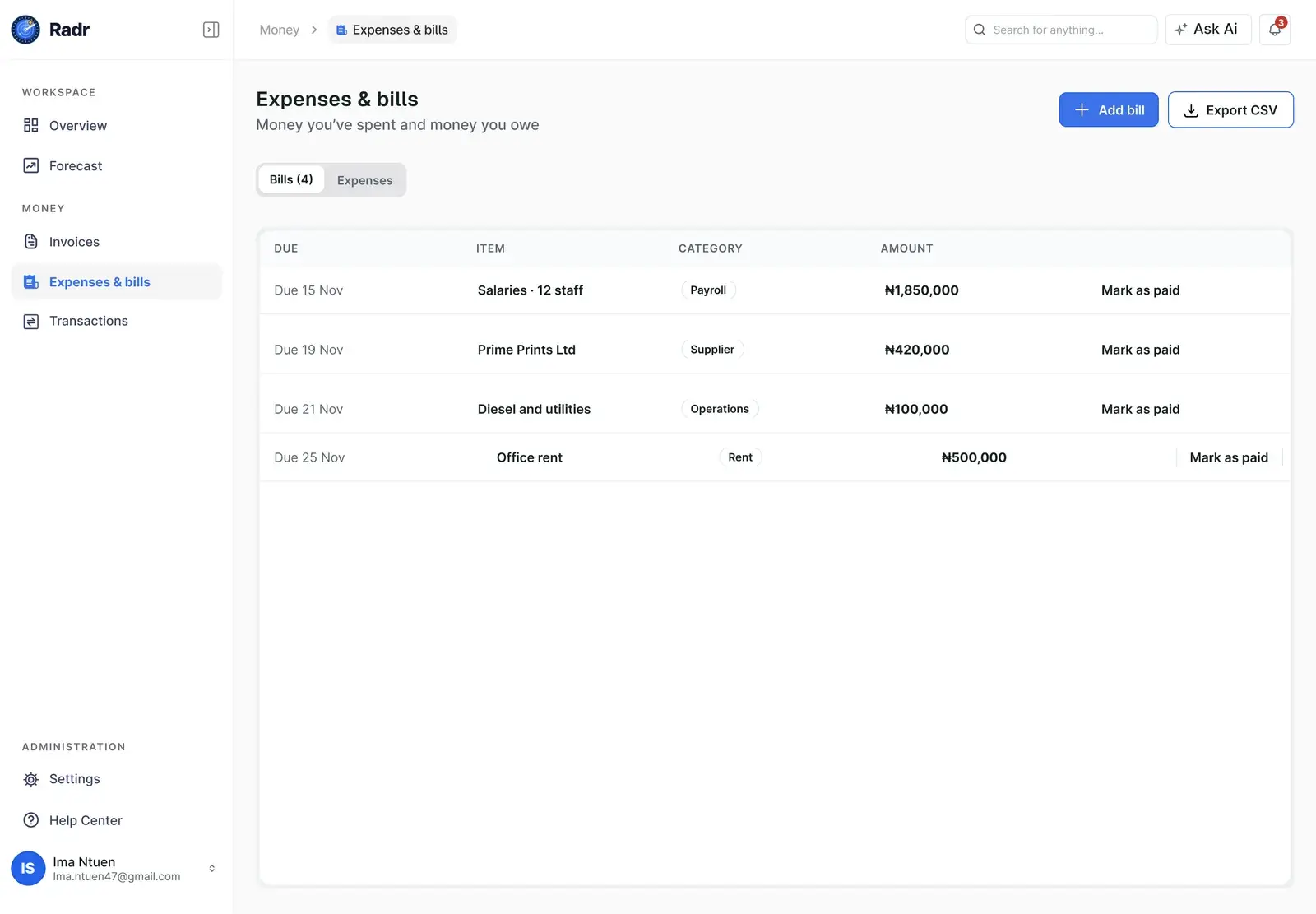
Expenses vs bills
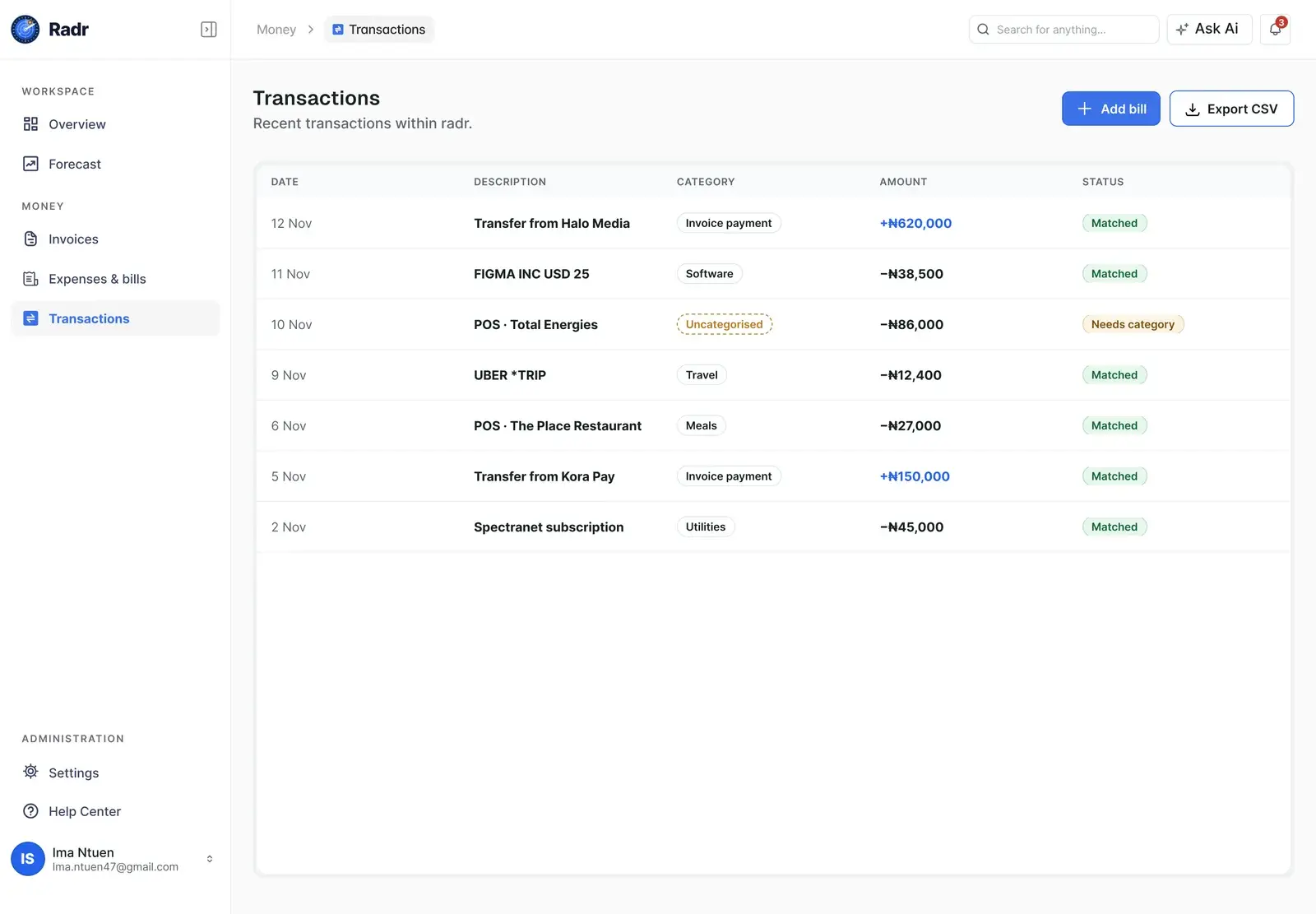
Bills you still owe are kept apart from money you’ve already spent, so nothing is counted twice and the forecast stays honest.
Two lists
Expenses are money already spent; bills are money you still owe, and they shape the forecast.
Paid once
Marking a bill as paid moves it to expenses, once.
Repeats on its own
Salaries and rent repeat, so the months ahead are already in the forecast.